

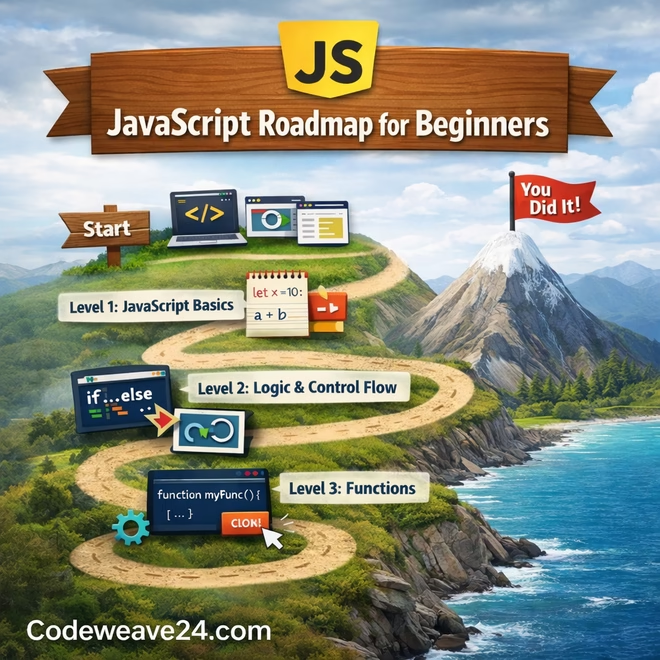
This article i will show you a clear roadmap that shows what to learn in what order and what to focus on as a beginner.
Introduction
JavaScript is one of the most popular programming languages in the world. It is used to create interactive websites, web apps also mobile and desktop applications. When you are a beginner learning JavaScript can feel confusing at first because there are many topics and tools.
If you follow this roadmap step by step learning JavaScript will become much easier the way you thinking.
What Is JavaScript?
JavaScript is a programming language that used to make websites interactive. It allows pages react when users click buttons, submit forms or type on their keyboard. With JavaScript a website can update content instantly without needing to reload the page making everything feel faster and more interactive.
JavaScript works together with:
- HTML (structure).
- CSS (design).
- JavaScript (behavior).

Tools You Need to Start
Before learning JavaScript you need a few basic tools. The good news is that all of them are free.
Code Editor
- The best editor for beginners and i would advise you is VS Code (Visual Studio Code).
- It is lightweight, easy to use and supports JavaScript very well.
Browser
- Use Google Chrome because it’s powerful developer tools.
- The Console helps you test JavaScript code and see errors.
Basic Files
Every beginner should know these files:
- index.html
- style.css
- script.js
JavaScript is usually connected to HTML like this:
<script src="script.js"></script>Level 1: JavaScript Basics
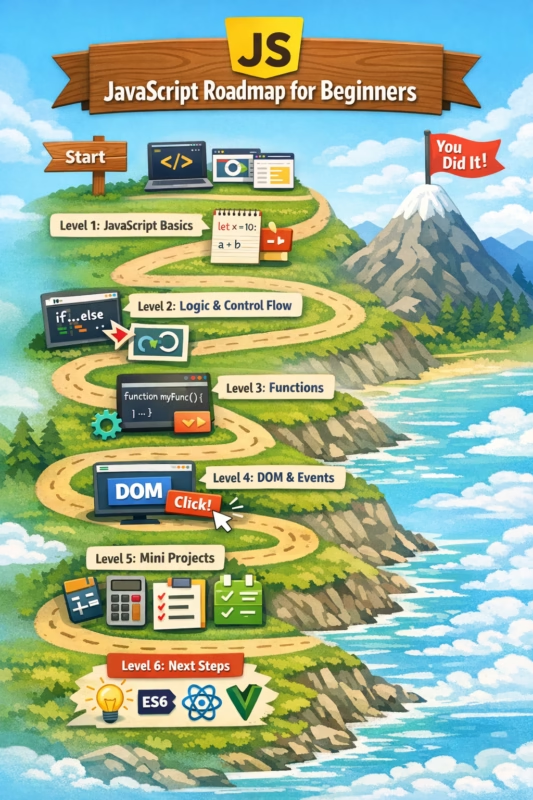
This is where every beginner must start. Do not skip this level.
You should learn:
- Variables (let, const).
- Data types (string, number, boolean).
- Operators (+, -, ==, ===).
- Comments.
These topics help you understand how JavaScript stores and uses data.
Level 2: Logic and Control Flow
At this level, you learn how JavaScript makes decisions.
Focus on:
- if and else statements.
- Comparison operators.
- Loops (for, while).
- Simple problem solving.
This level teaches you how to think like a programmer, not just write code.
Level 3: Functions
Functions help to organize your code and avoid repetition.
You should learn:
- How to create functions.
- Parameters.
- Return values.
Functions makes your code cleaner and easier to manage.
Level 4: JavaScript and the Browser (DOM)
This is the most exciting part for beginners because JavaScript becomes visual.
Learn:
- document.getElementById
- querySelector
- Events like click and submit
- Changing text and styles using JavaScript
This is where you start building real interactive pages.
Level 5: Practice with Mini Projects
Practice is the most important part of learning JavaScript.
Good beginner projects:
- Counter app
- Simple calculator
- To-do list
- Form validation
Projects help you turn knowledge into real skills.
Common Mistakes Beginners Make
Many beginners struggle because of these mistakes:
- Skipping the basics.
- Copy and pasting code without understanding.
- Jumping to frameworks too early.
- Not practicing regularly.
- Ignoring error messages.
Avoiding these mistakes will save you a lot of time.
How to Learn JavaScript Effectively
Use this simple rule and stick to it like it’s non-negotiable:
- 30% learning
- 70% practicing
The idea is straightforward learning sets the direction but practice is where the real progress happens. You don’t need to overthink the idea you just need to show up and do the work.
Daily routine example:
- 20 minutes reading
Use this time to understand concepts, patterns and why things work the way they do.
- 40 minutes coding
This is the main event. Write code, break things, fix them and learn by doing.
- 10 minutes reviewing errors
Look at what went wrong, understand your mistakes and lock in the lesson.
Consistency matters more than speed, slow days still count. Small wins add up. Keep the routine steady and results will follow.
What to Learn After the Basics
After mastering the basics you can move forward slowly.
Next topics:
- ES6 features
- Async JavaScript
- APIs
- JavaScript frameworks (React, Vue)
Do not rush. Strong basics make advanced topics easier.
Conclusion
JavaScript is not hard if you follow the right roadmap most people struggle not because the language is impossible but they jump around without a clear plan. When you start with the basics and actually understand them everything else becomes way less intimidating.
Practice daily even if even a little, fifteen or twenty minutes of focused effort beats hours of random coding. Write code, make mistakes, fix them and repeat. That cycle is where real learning happens.
Build small projects as you go. Simple things like a calculator, a to-do list or a basic form might feel too easy but they are doing important work behind the scenes. They teach you how pieces fit together and help you gain confidence one win at a time.
Do not compare yourself to others someone else progress has nothing to do with yours. People learn at different speeds, come from different backgrounds and have different amounts of time to practice. Focus on being better than you were yesterday not better than someone else today.
If you follow this JavaScript roadmap step by step you will build a strong foundation that actually lasting. You won’t just memorize syntax you will understand how things work. And with that understanding confidence naturally follows as you move forward.